Skip to content
  • isb2 Neck

    Moved Anatomy
    5
    2
    0 Votes
    5 Posts
    289 Views
    A
    [image: 1771152784120-5a362227-ea5f-4cf3-ae1b-613b2ac86cfb-image.png]
  • Post-Op reactive depression

    Communication
    3
    0 Votes
    3 Posts
    178 Views
    A
    PRESENTATION John, a 56-year-old occupation, previously fit/smoker/social drinker who is on his 5th POD following ... [e.g. right hemicolectomy], has showed signs of anhedonia, depression and fatigue. He has also showed some signs of positive core biological symptoms. Considering all of this, my provisional diagnosis is reactive (postoperative depression), I will also consider major depressive disorder, bipolar disorder. What will be your management? For mild condition Regular exercise Advice on sleep hygiene (regular sleep times, appropriate environment) = Psychosocial therapy -CBT Moderate to severe Regular exercise, advice on sleep hygiene CBT Medication -SSRIs High-intensity psychosocial intervention (CBT or interpersonal therapy) Immediate and considerable high risk to themselves or others: Admit to psychiatric ward (use Mental Health Act if necessary)
  • SBAR 2

    Moved Communication
    3
    0 Votes
    3 Posts
    315 Views
    A
    S — Situation “Hello, it’s David, the SHO on Ward 4G. I’m calling about Mrs Eleanor Thompson, DOB 15/06/1942, who is post-operative day 2 following a right mastectomy with axillary lymph node clearance. She has developed new right axillary swelling, discomfort, and mild shortness of breath, and I’m concerned about a possible early postoperative complication.” B — Background “She has moderate COPD, mild left ventricular failure, and hypertension. Her surgery two days ago was uneventful with 150 mL blood loss, and a drain was inserted. Since yesterday, her temperature has been slowly rising from 36.9 to 37.2 today. Importantly, the drain has had no output today, and the axilla appears swollen and mildly tender. Her daughter is requesting discharge today due to family childcare pressures, but given the clinical changes I feel this is unsafe.” A — Assessment “On examination, she has a swollen right axilla, mild tenderness, and no drain output. Her pain is controlled, and observations are otherwise stable apart from very mild temperature rise. Her bloods today show: WCC 10.2, Hb 11.5, platelets 230. My concern is a postoperative seroma, haematoma, or possibly early infection, or a blocked drain. Given her comorbidities and mild SOB, I also want to rule out cardiopulmonary causes.” R — Recommendation “I’d like you to review her urgently, please. I’d appreciate guidance on whether to: Attempt drainage (needle aspiration) or re-site/flush the drain, Start empirical antibiotics, Arrange ultrasound of the axilla, And confirm whether you agree she should not be discharged today. Could you please come to review her on Ward 4G, or advise on the next immediate steps?”
  • SBAR 1

    Moved Communication
    3
    0 Votes
    3 Posts
    193 Views
    A
    Model answer SpoilerC — SCRIPTED SBAR PHONE CALL (9-minute phone station — candidate lines) (Opening / identification) “Hello, I’m Dr X, a SHO from the Emergency Department. May I ask who I’m speaking to? … I’m calling about a patient called Jane Doe, DOB 15/04/1963, hospital number 0123456 — a 62-year-old lady who arrived 15 minutes ago with a suspected intracerebral haemorrhage. I’d like you to review the patient.” SpoilerS — Situation (short) “She has an acute left basal ganglia intracerebral haemorrhage on CT with intraventricular extension. She arrived 15 minutes ago and is currently in ED resus bay 2.” SpoilerB — Background (brief relevant items) “Key background: Atrial fibrillation on warfarin. Hypertension. Allergies none. On arrival her GCS is 13 (E4 V4 M5), left-sided weakness with power 2/5 in left arm and leg, blood pressure 210/112 mmHg, SpO₂ 97% on air. Point-of-care INR 3.2.” SpoilerA — Assessment (clinical status & investigations) “CT head performed shows a ~3.2 cm left basal ganglia bleed with intraventricular extension; no acute hydrocephalus on initial CT. We’ve given IV labetalol 20 mg once and started oxygen 2 L/min. IV access established, bloods including clotting and group & save sent. She is NBM and being monitored. I’m concerned about ongoing anticoagulation (INR 3.2) and the high blood pressure.” SpoilerR — Recommendation (what you want them to do) “I would like urgent neurosurgical review to assess for surgical intervention/need for transfer. I also recommend immediate reversal of warfarin with PCC and IV vitamin K — could you authorise this or come see? Please advise BP target and agent; if agreeable we plan to target systolic <140 mmHg. Finally, please advise level of care (HDU/ITU) and whether you want a CT repeat and timing. I can send you the CT images to review on PACS and have the patient ready for review now in resus bay 2 — can you come to ED or should we arrange transfer?” Close “Thank you — I’m able to give you further information or bring the patient to the neurosurgical unit if advised. My contact is bleep 321. Do you need any additional details now?” D — Examiner / Marking tips & likely questions to expect Key points examiners look for (communication and clinical content): Clear identification and succinct SBAR structure. Immediate recognition of reversible causes and time-sensitive actions: urgent reversal of warfarin (PCC + vitamin K) and BP control. Clear request for neurosurgical review and suggestion of level of care (HDU/ITU). Safe airway plan (NBM, prepare for decline), monitoring plan and clear escalation triggers. Appropriate documentation: CT findings, GCS, observations, anticoagulant status and INR. Likely follow-up questions the examiner/onsite consultant may ask (prepare short answers): “What is the exact CT finding?” → Left basal ganglia ICH ~3.2 cm with intraventricular extension; no acute hydrocephalus. “What’s her INR and when was last warfarin dose?” → INR 3.2 (POC); husband reports she took warfarin that morning. “What have you given already?” → IV labetalol 20 mg once; oxygen; analgesia; IV access; bloods sent. “What BP target do you propose?” → Target systolic 130–140 mmHg if tolerated; recommend nicardipine infusion if boluses fail. “Is she a surgical candidate?” → Unsure — needs neurosurgical assessment; size and intraventricular extension raise concern; recommend urgent neurosurgical review for EVD/consider decompression/transfer. Pitfalls to avoid in the station Missing anticoagulation status. Forgetting to ask for neurosurgery. Not naming a BP target or asking for specific reversal agents. Failing to document GCS or a change in GCS as an escalation trigger.
  • isb9 Lower limb

    Moved Anatomy
    6
    1
    0 Votes
    6 Posts
    402 Views
    A
    [image: 1761397964716-452eaefd-0748-46d1-98ac-c05d52e545e9-image.png]
  • Back pain

    History
    3
    0 Votes
    3 Posts
    198 Views
    A
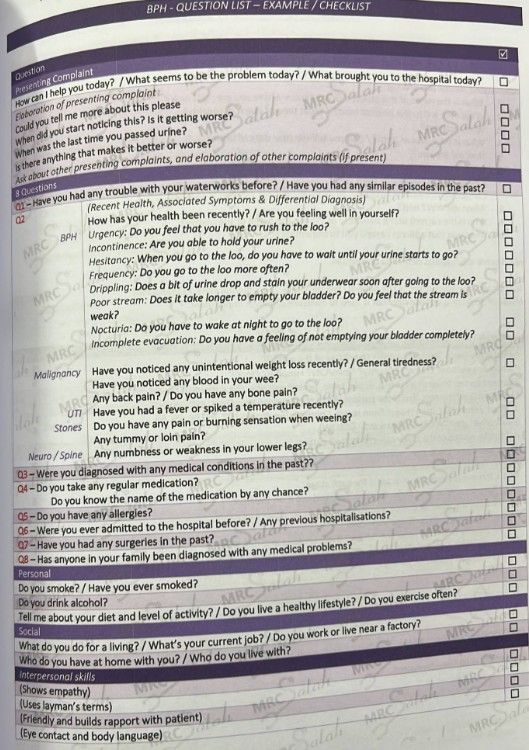
    Examiner: Please summarize your case. "Mrs Janice Green is a 54-year-old woman with 4 months of chronic lower back pain, dull and aching, sometimes shooting down both legs to her feet, increasing in intensity, keeping her awake at night, worsening. She denies numbness, weakness, or bladder/bowel problems. She has hypertension, is unemployed, and she primary carer for her disabled husband, reporting significant stress and functional limitation. She has had a previous MRI, and no other systemic symptoms. This is most likely mechanical back pain, but red flags include night pain and possible weight loss, so further evaluation and broad support are appropriate." Examiner: How would you manage this patient? I would inform my seniors, perform a clinical examination, and order some investigations including: Full blood count: Looking for anemia which may indicate malignancy, leukocytosis which may indicate infection or inflammatory causes. Serology: Which may indicate an autoimmune process such as rheumatoid arthritis. Plasma electrophoresis: For possibility of multiple myeloma. Liver function tests: For possibility of metastatic disease or as part of an extraintestinal manifestation of inflammatory bowel disease. Plasma amino-lipase: May be considered if pancreatitis is suspected. Urea and electrolytes: May be ordered especially if the suspected diagnosis is multiple myeloma, which is associated with renal failure. Radiological investigation may include: X ray of the spine: Looking for bony abnormalities. MRI of the spine: Looking for disc pathology, spinal cord/cauda equina compression, or to determine diagnosis such as facet joint arthropathy. Abdominal ultrasound scan: if an abdominal aortic aneurysm is suspected. CT scan of the abdomen: may be considered if a diagnosis of chronic pancreatitis is suspected. Treatment will be tailored to the underlying cause, in this case the likely cause is primary or secondary spine malignancy, it needs to be discussed in a MDT meeting, if disseminated malignancy it will likely include radiotherapy, chemotherapy, and pain management, if her pain is complex pain management teams may be included. Note: When formulating a management plan, inform the patient, it is not mandatory that you get the right diagnosis, just give a reasonable set of investigations that will help you reach the diagnosis, and treatment plan for the most likely diagnosis in a brief manner. Note: When formulating a management plan, always remember that you are NOT ALONE, always involve other parts of the team, for example, pain management team, radiologist, pharmacist... etc. according to the case you are dealing with.
  • Knee Pain

    History
    3
    0 Votes
    3 Posts
    220 Views
    A
    Discussion Examiner: Summarize your case and give a differential "Mr. David Johnson is a 50-year-old former football player with a background history of Diabetes mellitus on Metformin, who presents with 4 months of right knee pain. The pain is gradual in onset, dull and aching, worsens with activity and at the end of the day, and improves with rest. He reports morning stiffness of about 10 minutes. He had a knee injury and surgery 30 years ago, details of which are unclear. There are no associated swelling, redness, systemic symptoms, or other joint involvement." The most likely diagnosis is post-traumatic osteoarthritis on the account of his past knee injury, his pain also being in keeping with the differentiating and exacerbating include: Chronic meniscal tear. Inflammatory arthritis such as ankylosing spondylitis or rheumatoid arthritis. Primary or secondary bone malignancy. Osteonecrosis of the knee. Crystal arthropathy including gout and pseudogout. Septic arthritis, which is unlikely. Give your main diagnosis, and then list the others, try to make a list from the most likely to the less likely. Examiner: What is your management plan? I would first examine the patient, and inform my seniors to get their advice, this will allow me to order a more focused set of investigations, but investigations needed may include: Biochemical investigations: FBC: Looking for anemia, which is seen with malignancy, chronic disease, and inflammatory bowel disease, leukocytosis, which is seen with infective or inflammatory pathologies. CRP and ESR: As inflammatory markers. Serology: looking for autoimmune process is suspected such as rheumatoid arthritis. Imaging: X-ray of the knee in two views looking for signs of osteoarthritis. MRI scan of the knee which can better characterize osteoarthritis, detect early changes, and detect meniscal or ligamentous injuries. Examiner: How would you treat this case? After discussion with my seniors, treatment will be tailored to the underlying diagnosis, in this case osteoarthritis is most likely, treatment options can include: Conservative treatment: Achieve healthy weight and maintain exercise, this will reduce mechanical stress on the joint. Physiotherapy, focusing on strengthening the muscles around the knee. Analgesia, this may include paracetamol or NSAID's. Intra-articular steroid injections. Surgical management: Total or partial arthroplasty. Arthroscopy, in conclusion if there are loose bodies or meniscal tears, but it does not affect the progression of osteoarthritis. Realignment osteotomies, which are designed to redistribute weight away from the affected knee compartment, it can delay the need for arthoplasty. Examiner: If total knee replacement is carried out, what are the causes failure of total knee replacement? Aseptic loosening of the implant. Wear and tear in the joint. Early or late prosthetic joint infection. Periprosthetic fractures. Examiner: What do you mean by aseptic loosening? Aseptic loosening refers to the separation of the implant from the bone due to chronic inflammatory reaction, it does not involve bacterial infection, rather the debris from the wearing of implant components triggers an inflammatory reaction in the surrounding bone, leading to osteolysis, bone loss and implant loosening over time, it is a long term complication. Examiner: Will this patient be able to play soccer in 9 months after a total knee replacement, and why? Unlikely to be able to play soccer in 9 months, it is generally not recommended because this can damage the prosthesis and cause early loosening of the implant. Examiner: What X ray findings are consistent with osteoarthritis? Joint Space Narrowing (JSN)
  • Mediastinum

    Moved Anatomy
    2
    1
    0 Votes
    2 Posts
    131 Views
    A
    spotter4.html
  • isb10 lung

    Moved Anatomy
    2
    1
    0 Votes
    2 Posts
    159 Views
    A
    [image: 1760565114719-37a900b4-4bc1-48e8-a383-3383167529fa-image.png]
  • Hand

    Moved Anatomy
    1
    1
    0 Votes
    1 Posts
    101 Views
    No one has replied
  • isb3 Vertebra

    Moved Anatomy
    8
    2
    0 Votes
    8 Posts
    490 Views
    A
    anac1.html
  • isb8 heart

    Moved Anatomy
    1
    1
    0 Votes
    1 Posts
    76 Views
    No one has replied
  • isb5 Forearm Extensor muscles

    Moved Anatomy
    2
    1
    0 Votes
    2 Posts
    603 Views
    A
    Left hand from behind [image: 1760103624953-9f4ae09c-23ed-4f41-907e-e8b42e8dac62-image.png] 11 Extensor pollicis brevis. 12 Extensor pollicis longus. 6 Extensor carpi radialis longus. [image: 1760103624953-9f4ae09c-23ed-4f41-907e-e8b42e8dac62-image.png] 5 Extensor carpi radialis brevis. 9 Extensor digitorum 10 Extensor indicis [image: 1760103624953-9f4ae09c-23ed-4f41-907e-e8b42e8dac62-image.png] 8 Extensor digiti minimi 14 First dorsal interosseous 16 Second dorsal interosseous answers[image: 1760103639333-44029a07-c8b5-4502-b891-25e7ee396749-image.png]
  • isb7 Lower Limb

    Moved Anatomy
    3
    1
    0 Votes
    3 Posts
    323 Views
    A
    Anterior [image: 1757607222780-090205a8-dc19-4036-baa6-c265e07a8591-image.png] Spoiler [image: 1757606977748-a7046645-fb1e-41d8-9a6a-60a411ec8218-image.png] Posterior [image: 1757606627233-8bb534ad-b401-4a07-8b0c-8ee290285be8-image.png] Spoiler[image: 1757606789866-c65988de-927e-49f3-a303-5fab5b16c349-image.png]
  • isb1 Skull foramina

    Moved Anatomy
    5
    1
    0 Votes
    5 Posts
    558 Views
    A
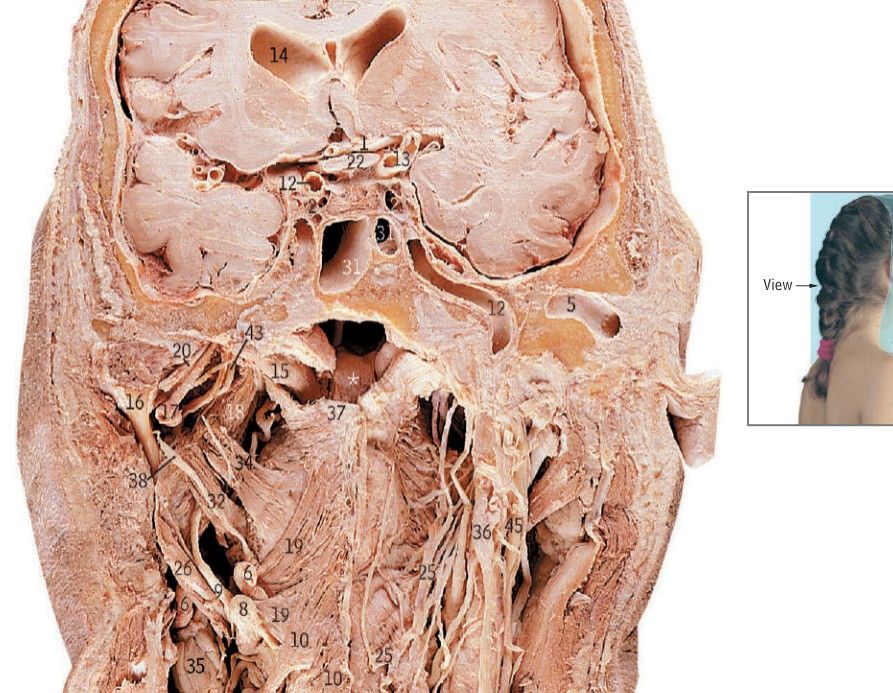
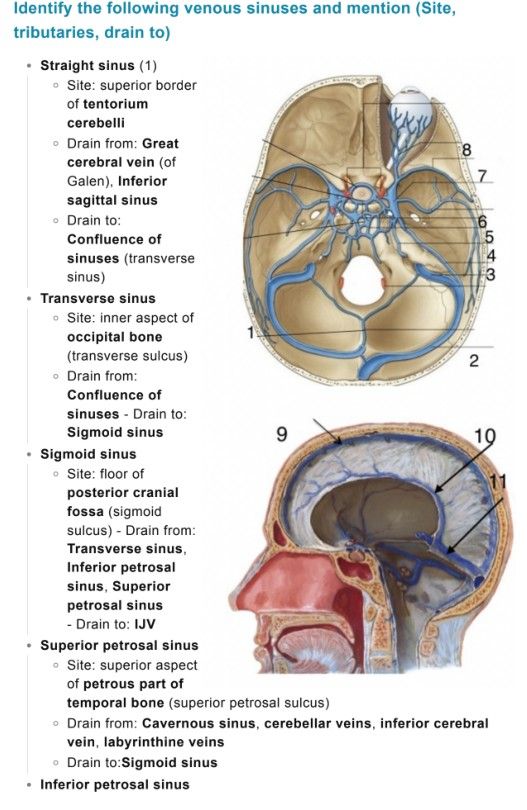
    Station Topic: Brain Anatomy – Internal Carotid Artery Question (20 marks) [image: 1759597375048-2ab79662-441a-40de-b185-1c9d05240885-image.png] You are asked to demonstrate your knowledge of the internal carotid artery (ICA) and its relation to brain anatomy. Identify and describe the course of the internal carotid artery from the neck to the brain. (5 marks) Spoiler1 The ICA arises from the common carotid artery at the level of C3–C4 vertebrae. Cervical segment: Ascends vertically in the neck without branching. Petrous segment: Enters the carotid canal in the petrous temporal bone; runs anteromedially. Cavernous segment: Courses through the cavernous sinus; forms an S-shaped curve (the carotid siphon). Cerebral (supraclinoid) segment: Exits the cavernous sinus and pierces the dura mater at the roof of the cavernous sinus to enter the subarachnoid space; gives terminal branches to the brain. Tip: Remember mnemonic “Cervical, Petrous, Cavernous, Cerebral” to recall ICA segments. 2 List and explain the main branches of the internal carotid artery in the cranial cavity. (5 marks) SpoilerOphthalmic artery: First branch; supplies the orbit and optic nerve. Posterior communicating artery (PComm): Connects ICA to posterior cerebral artery; part of Circle of Willis. Anterior choroidal artery: Supplies choroid plexus, internal capsule, optic tract. Terminal branches: Anterior cerebral artery (ACA): Medial frontal and parietal lobes. Middle cerebral artery (MCA): Lateral convexity of cerebral hemisphere. Tip: ACA + MCA = terminal branches; remember PComm is part of collateral circulation. 3 Describe the areas of the brain supplied by these branches. (5 marks) SpoilerBranch Area Supplied Ophthalmic Eye, orbit, optic nerve Posterior communicating Connects ICA to posterior cerebral artery; collateral supply to occipital lobe Anterior choroidal Posterior limb of internal capsule, optic tract, globus pallidus, choroid plexus Anterior cerebral (ACA) Medial frontal and parietal lobes; leg motor/sensory cortex Middle cerebral (MCA) Lateral convexity of hemisphere; face and upper limb motor/sensory cortex, Broca/Wernicke areas Clinical Relevance of ICA (5 marks) Outline the clinical relevance of the internal carotid artery. Include at least two common pathologies and their implications. SpoilerAtherosclerosis / ICA stenosis: Can cause transient ischaemic attacks (TIAs) or stroke in MCA/ACA territories. Risk factors: hypertension, diabetes, smoking. Aneurysm formation: Common at bifurcation into MCA and ACA or posterior communicating artery. May cause subarachnoid haemorrhage or cranial nerve III palsy if PComm involved. Other considerations: SpoilerICA injury during carotid endarterectomy. Compression by tumours (e.g., pituitary adenoma in cavernous sinus) → ophthalmoplegia.
  • isb4 Humerus

    Moved Anatomy
    3
    4
    0 Votes
    3 Posts
    186 Views
    A
    Right humerus lower end, A) Front B) Behind [image: 1760100719273-504353c4-52fc-4100-b8c5-d7b78397d7f0-image.png] 2 Capitulum. 5 Lateral epicondyle. 13 Trochlea. [image: 1760100719273-504353c4-52fc-4100-b8c5-d7b78397d7f0-image.png] 7 Medial epicondyle. 8 Medial supracondyle ridge 10 Olecranon fossa.
  • Larynx

    Moved Anatomy
    1
    2
    0 Votes
    1 Posts
    175 Views
    No one has replied
  • Nerves to Mandible

    Moved Anatomy
    1
    1
    0 Votes
    1 Posts
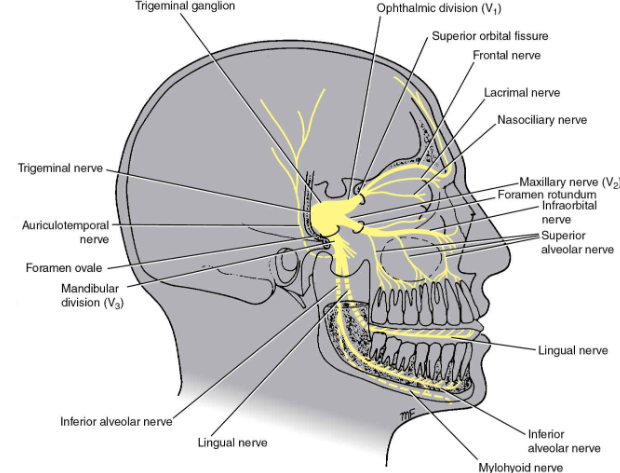
    64 Views
    No one has replied
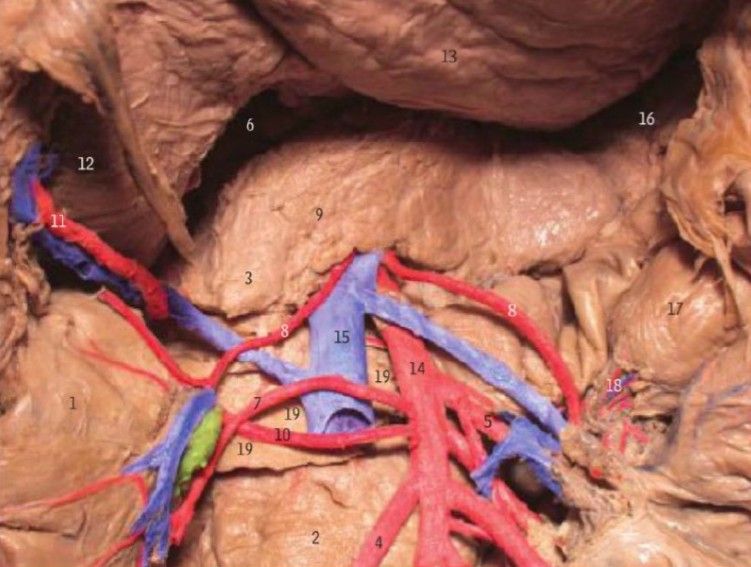
  • Major haemorrhage protocol trauma station

    Moved Anatomy
    4
    1
    0 Votes
    4 Posts
    264 Views
    A
    Explain the steps in Resuscitation and Monitoring (5 marks)
  • Station - parotid gland

    Moved Anatomy
    4
    2
    0 Votes
    4 Posts
    226 Views
    S
    @admin said in Station - parotid gland: Parasympathetic Parasympathetic (secretomotor) innervation The parasympathetic supply increases the production of watery saliva. Its pathway is long and complex, beginning with the glossopharyngeal nerve (CN IX). Origin: The preganglionic parasympathetic fibers arise from the inferior salivatory nucleus in the brainstem. Course: The fibers travel along the glossopharyngeal nerve and a small branch called the tympanic nerve, which passes through the middle ear. Synapse: The fibers continue as the lesser petrosal nerve and synapse in the otic ganglion, which is a collection of nerve cell bodies near the base of the skull. Supply: The postganglionic fibers then "hitchhike" along the auriculotemporal nerve (a branch of the trigeminal nerve) to reach and innervate the parotid gland. (Hence sometimes post parotidectomy when the great auricular nerve is sacrified or injured - it causes Frey's syndrome - where regenerating of parasympathetic fibers accidentally "rewire" themselves to connect with the sympathetic pathways that lead to the skin's sweat glands and blood vessels Sympathetic innervation The sympathetic supply reduces saliva production, causing a thicker, more viscous saliva via vasoconstriction. • The postganglionic sympathetic fibers originate from the superior cervical ganglion and travel to the gland along the external carotid artery. Sensory innervation The parotid gland receives its sensory supply from two nerves. • Auriculotemporal nerve: This nerve provides general sensory innervation directly to the substance of the gland. • Great auricular nerve: This nerve, a branch of the cervical plexus (C2 and C3), supplies the sensory innervation to the tough fascia or capsule of the parotid gland.