Skip to content

Surgery

This category can be followed from the open social web via the handle surgery@isurg.org

12 Topics 25 Posts
  • SBAR 2

    3
    0 Votes
    3 Posts
    107 Views
    A
    S — Situation “Hello, it’s David, the SHO on Ward 4G. I’m calling about Mrs Eleanor Thompson, DOB 15/06/1942, who is post-operative day 2 following a right mastectomy with axillary lymph node clearance. She has developed new right axillary swelling, discomfort, and mild shortness of breath, and I’m concerned about a possible early postoperative complication.” B — Background “She has moderate COPD, mild left ventricular failure, and hypertension. Her surgery two days ago was uneventful with 150 mL blood loss, and a drain was inserted. Since yesterday, her temperature has been slowly rising from 36.9 to 37.2 today. Importantly, the drain has had no output today, and the axilla appears swollen and mildly tender. Her daughter is requesting discharge today due to family childcare pressures, but given the clinical changes I feel this is unsafe.” A — Assessment “On examination, she has a swollen right axilla, mild tenderness, and no drain output. Her pain is controlled, and observations are otherwise stable apart from very mild temperature rise. Her bloods today show: WCC 10.2, Hb 11.5, platelets 230. My concern is a postoperative seroma, haematoma, or possibly early infection, or a blocked drain. Given her comorbidities and mild SOB, I also want to rule out cardiopulmonary causes.” R — Recommendation “I’d like you to review her urgently, please. I’d appreciate guidance on whether to: Attempt drainage (needle aspiration) or re-site/flush the drain, Start empirical antibiotics, Arrange ultrasound of the axilla, And confirm whether you agree she should not be discharged today. Could you please come to review her on Ward 4G, or advise on the next immediate steps?”
  • SBAR 1

    3
    0 Votes
    3 Posts
    37 Views
    A
    Model answer SpoilerC — SCRIPTED SBAR PHONE CALL (9-minute phone station — candidate lines) (Opening / identification) “Hello, I’m Dr X, a SHO from the Emergency Department. May I ask who I’m speaking to? … I’m calling about a patient called Jane Doe, DOB 15/04/1963, hospital number 0123456 — a 62-year-old lady who arrived 15 minutes ago with a suspected intracerebral haemorrhage. I’d like you to review the patient.” SpoilerS — Situation (short) “She has an acute left basal ganglia intracerebral haemorrhage on CT with intraventricular extension. She arrived 15 minutes ago and is currently in ED resus bay 2.” SpoilerB — Background (brief relevant items) “Key background: Atrial fibrillation on warfarin. Hypertension. Allergies none. On arrival her GCS is 13 (E4 V4 M5), left-sided weakness with power 2/5 in left arm and leg, blood pressure 210/112 mmHg, SpO₂ 97% on air. Point-of-care INR 3.2.” SpoilerA — Assessment (clinical status & investigations) “CT head performed shows a ~3.2 cm left basal ganglia bleed with intraventricular extension; no acute hydrocephalus on initial CT. We’ve given IV labetalol 20 mg once and started oxygen 2 L/min. IV access established, bloods including clotting and group & save sent. She is NBM and being monitored. I’m concerned about ongoing anticoagulation (INR 3.2) and the high blood pressure.” SpoilerR — Recommendation (what you want them to do) “I would like urgent neurosurgical review to assess for surgical intervention/need for transfer. I also recommend immediate reversal of warfarin with PCC and IV vitamin K — could you authorise this or come see? Please advise BP target and agent; if agreeable we plan to target systolic <140 mmHg. Finally, please advise level of care (HDU/ITU) and whether you want a CT repeat and timing. I can send you the CT images to review on PACS and have the patient ready for review now in resus bay 2 — can you come to ED or should we arrange transfer?” Close “Thank you — I’m able to give you further information or bring the patient to the neurosurgical unit if advised. My contact is bleep 321. Do you need any additional details now?” D — Examiner / Marking tips & likely questions to expect Key points examiners look for (communication and clinical content): Clear identification and succinct SBAR structure. Immediate recognition of reversible causes and time-sensitive actions: urgent reversal of warfarin (PCC + vitamin K) and BP control. Clear request for neurosurgical review and suggestion of level of care (HDU/ITU). Safe airway plan (NBM, prepare for decline), monitoring plan and clear escalation triggers. Appropriate documentation: CT findings, GCS, observations, anticoagulant status and INR. Likely follow-up questions the examiner/onsite consultant may ask (prepare short answers): “What is the exact CT finding?” → Left basal ganglia ICH ~3.2 cm with intraventricular extension; no acute hydrocephalus. “What’s her INR and when was last warfarin dose?” → INR 3.2 (POC); husband reports she took warfarin that morning. “What have you given already?” → IV labetalol 20 mg once; oxygen; analgesia; IV access; bloods sent. “What BP target do you propose?” → Target systolic 130–140 mmHg if tolerated; recommend nicardipine infusion if boluses fail. “Is she a surgical candidate?” → Unsure — needs neurosurgical assessment; size and intraventricular extension raise concern; recommend urgent neurosurgical review for EVD/consider decompression/transfer. Pitfalls to avoid in the station Missing anticoagulation status. Forgetting to ask for neurosurgery. Not naming a BP target or asking for specific reversal agents. Failing to document GCS or a change in GCS as an escalation trigger.
  • Larynx

    Moved
    1
    2
    0 Votes
    1 Posts
    120 Views
    No one has replied
  • nerves Facial

    Moved
    1
    1
    0 Votes
    1 Posts
    45 Views
    No one has replied
  • Nerves to Mandible

    Moved
    1
    1
    0 Votes
    1 Posts
    31 Views
    No one has replied
  • Hematuria History

    Moved
    1
    0 Votes
    1 Posts
    54 Views
    No one has replied
  • Major haemorrhage protocol trauma station

    Moved
    4
    1
    0 Votes
    4 Posts
    93 Views
    A
    Explain the steps in Resuscitation and Monitoring (5 marks)
  • Station - parotid gland

    Moved
    4
    2
    0 Votes
    4 Posts
    94 Views
    S
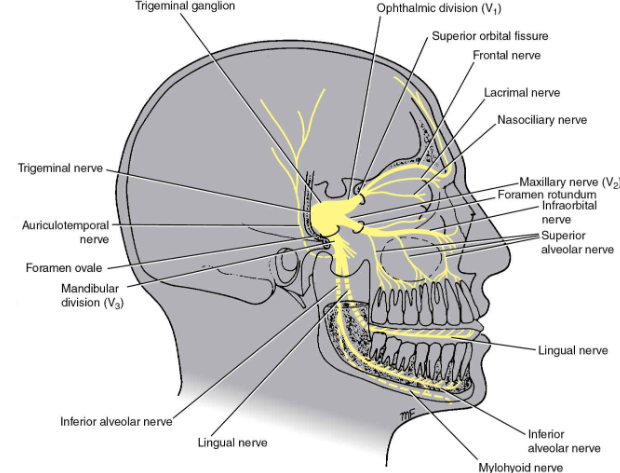
    @admin said in Station - parotid gland: Parasympathetic Parasympathetic (secretomotor) innervation The parasympathetic supply increases the production of watery saliva. Its pathway is long and complex, beginning with the glossopharyngeal nerve (CN IX). Origin: The preganglionic parasympathetic fibers arise from the inferior salivatory nucleus in the brainstem. Course: The fibers travel along the glossopharyngeal nerve and a small branch called the tympanic nerve, which passes through the middle ear. Synapse: The fibers continue as the lesser petrosal nerve and synapse in the otic ganglion, which is a collection of nerve cell bodies near the base of the skull. Supply: The postganglionic fibers then "hitchhike" along the auriculotemporal nerve (a branch of the trigeminal nerve) to reach and innervate the parotid gland. (Hence sometimes post parotidectomy when the great auricular nerve is sacrified or injured - it causes Frey's syndrome - where regenerating of parasympathetic fibers accidentally "rewire" themselves to connect with the sympathetic pathways that lead to the skin's sweat glands and blood vessels Sympathetic innervation The sympathetic supply reduces saliva production, causing a thicker, more viscous saliva via vasoconstriction. • The postganglionic sympathetic fibers originate from the superior cervical ganglion and travel to the gland along the external carotid artery. Sensory innervation The parotid gland receives its sensory supply from two nerves. • Auriculotemporal nerve: This nerve provides general sensory innervation directly to the substance of the gland. • Great auricular nerve: This nerve, a branch of the cervical plexus (C2 and C3), supplies the sensory innervation to the tough fascia or capsule of the parotid gland.
  • Spermatic cord

    Moved
    1
    1
    0 Votes
    1 Posts
    74 Views
    No one has replied
  • The Larynx

    Moved
    1
    1
    0 Votes
    1 Posts
    43 Views
    No one has replied
  • Gastric Outlet Obstruction

    Moved
    3
    0 Votes
    3 Posts
    122 Views
    A
    Management CCRISP protocol Normal Saline with potassium
  • Acute Pancreatitis

    Moved
    2
    0 Votes
    2 Posts
    127 Views
    A
    Differential Diagnosis Acute Pancreatitis Pancreatic collection Pancreatic pseudocyst Acute Cholecystitis Ascending cholangitis Cause of tachypnea ARDS Abdominal pain Pressure from Pseudocyst Sign of sepsis Respiratory complication such as pleural effusion Functions of Pancreas Endocrine -Alpha - glucagon -Beta - Insulin -Delta - Somatostatin Exocrine -Proteases -Lipolytic -Starch digestion Definition of acute pancreatitis Acute pancreatitis is a condition where the pancreas becomes inflamed (swollen) over a short period of time