WTF Just Happened? | The Corrupt Memory Industry & Micron

-
Steve still doesn't quite see that this is the capitalist system working as intended - serving the owner (capitalist) class, but he's definitely getting radicalized by the current reality of it.
-
Steve still doesn't quite see that this is the capitalist system working as intended - serving the owner (capitalist) class, but he's definitely getting radicalized by the current reality of it.
The worst of it hasn't happened yet. The point where consumers can no longer afford to consume is coming. The system isn't self sustainable if they continue to chase profits in the short term regardless of what happens in the long term. They're creating a system where only they will be consumers and that leads to a devaluation of all the currency they're hoarding.
Prices can't continue to go up if people can't afford things. This price hike is going to have far reaching consequences and increase prices of everything.
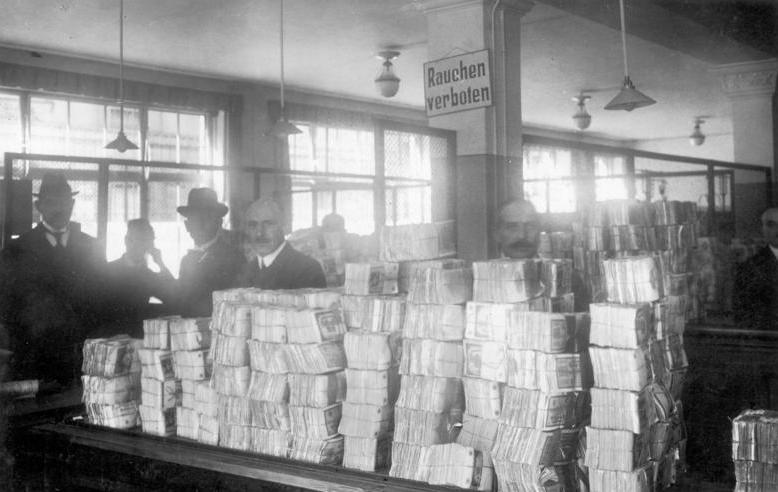
The people of Germany were burning German marks in the street. They traded goods for goods when they were available, and burned the money for warmth.
The rich of our current generation seem to think they can golden parachute out of this. They haven't thought about the long term repercussions of a world power of the US's magnitude descending to third world country status, but that's what is coming.
-
The creator in that video seems to think the Chips Act subsidies were to benefit consumers by having affordable memory produced domestically. That wasn't the goal. The goal was to derive drive GDP by having another source of domestic production, and drive job growth/tax revenue from workers working at the domestic facility. Lastly, it was to have strategic domestic production decoupled from other nations so we, as a nation, could not be held hostage by another nation (like we do to so many other nations) for crucial (pun very much intended) resources we need.
Nothing about that is about making RAM cheaper for retail consumers.
-
The worst of it hasn't happened yet. The point where consumers can no longer afford to consume is coming. The system isn't self sustainable if they continue to chase profits in the short term regardless of what happens in the long term. They're creating a system where only they will be consumers and that leads to a devaluation of all the currency they're hoarding.
Prices can't continue to go up if people can't afford things. This price hike is going to have far reaching consequences and increase prices of everything.
The people of Germany were burning German marks in the street. They traded goods for goods when they were available, and burned the money for warmth.
The rich of our current generation seem to think they can golden parachute out of this. They haven't thought about the long term repercussions of a world power of the US's magnitude descending to third world country status, but that's what is coming.
The worst of it hasn’t happened yet. The point where consumers can no longer afford to consume is coming.
Its mostly already arrived.
"As of June 30, the top 20% of earners accounted for more than 63% of all spending"
This means that the other 80% of Americans represent only 37% of the spending done today. If a company is looking to maximize profits the typical path is to do so by marketing to the group where they could earn the most money. That is less and less the bottom 80% of Americans.
-
The creator in that video seems to think the Chips Act subsidies were to benefit consumers by having affordable memory produced domestically. That wasn't the goal. The goal was to derive drive GDP by having another source of domestic production, and drive job growth/tax revenue from workers working at the domestic facility. Lastly, it was to have strategic domestic production decoupled from other nations so we, as a nation, could not be held hostage by another nation (like we do to so many other nations) for crucial (pun very much intended) resources we need.
Nothing about that is about making RAM cheaper for retail consumers.
I think that's the surface level, rational reading, but I think the realistic reading is it was simply a kickback to fortune 500 companies that got these politicians elected. Haven't we already funded at least one factory that ended up being smoke and mirrors?
-
I think that's the surface level, rational reading, but I think the realistic reading is it was simply a kickback to fortune 500 companies that got these politicians elected. Haven't we already funded at least one factory that ended up being smoke and mirrors?
but I think the realistic reading is it was simply a kickback to fortune 500 companies that got these politicians elected.
If there were no legitimate geopolitical reasons, then the "simply a kickback" would be much more plausible. Also, if it was a single source company, then "simply a kickback" would look true. Additionally, if was perhaps just domestic companies "simply a kickback" would certainly be even more likely. Lastly, the Chips act wasn't just about production domestically. It also blocked sales/exports of completed high end chips and chip making equipment to China. If the Chips act was "simple a kickback" you wouldn't do all that other stuff, and you certainly wouldn't allow foreign winners (like Taiwan's TSMC).
Was their rewards because of industry lobbying? Certainly. However, unless you're in a purely communist system of government where all the companies are owned by the state, you're always going to have private companies benefiting from government spending, tax breaks, and subsidies. As to this just applying to fortune 500 companies, there isn't really a "mom and pop" semiconductor industry making handfuls of chips at a time except outside of engineering sample that are used in R&D for fortune 500 companies.