[Paper] The Carbohydrate-Insulin Model of Obesity - Beyond “Calories In, Calories Out” - 2018

-
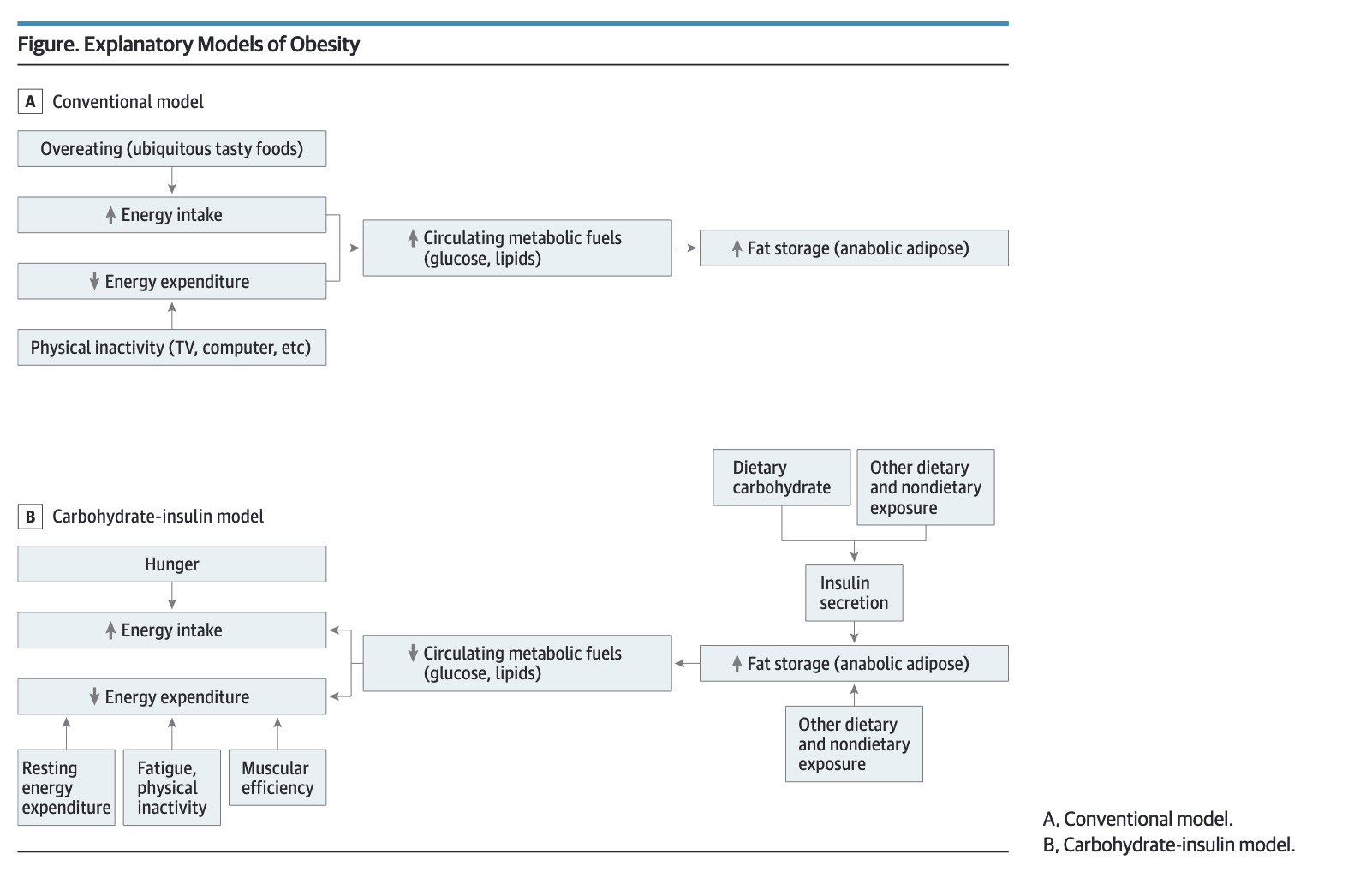
Despite intensive research, the causes of the obesity epidemic remain incompletely understood and conventional calorie-restricted diets continue to lack long-term efficacy. According to the carbohydrate-insulin model (CIM) of obesity, recent increases in the consumption of processed, high–glycemic-load carbohydrates produce hormonal changes that promote calorie deposition in adipose tissue, exacerbate hunger, and lower energy expenditure. Basic and genetic research provides mechanistic evidence in support of the CIM. In animals, dietary composition has been clearly demonstrated to affect metabolism and body composition, independently of calorie intake, consistent with CIM predictions. Meta-analyses of behavioral trials report greater weight loss with reduced-glycemic load vs low-fat diets, though these studies characteristically suffer from poor long-term compliance. Feeding studies have lacked the rigor and duration to test the CIM, but the longest such studies tend to show metabolic advantages for low-glycemic load vs low-fat diets. Beyond the type and amount of carbohydrate consumed, the CIM provides a conceptual framework for understanding how many dietary and nondietary exposures might alter hormones, metabolism, and adipocyte biology in ways that could predispose to obesity. Pending definitive studies, the principles of a low-glycemic load diet offer a practical alternative to the conventional focus on dietary fat and calorie restriction.
https://doi.org/10.1001/jamainternmed.2018.2933
Full Paper here
[Sorry to keep reposting this, I've had to move communities 3 times in the last month, it makes linking references a chore]
-
Despite intensive research, the causes of the obesity epidemic remain incompletely understood and conventional calorie-restricted diets continue to lack long-term efficacy. According to the carbohydrate-insulin model (CIM) of obesity, recent increases in the consumption of processed, high–glycemic-load carbohydrates produce hormonal changes that promote calorie deposition in adipose tissue, exacerbate hunger, and lower energy expenditure. Basic and genetic research provides mechanistic evidence in support of the CIM. In animals, dietary composition has been clearly demonstrated to affect metabolism and body composition, independently of calorie intake, consistent with CIM predictions. Meta-analyses of behavioral trials report greater weight loss with reduced-glycemic load vs low-fat diets, though these studies characteristically suffer from poor long-term compliance. Feeding studies have lacked the rigor and duration to test the CIM, but the longest such studies tend to show metabolic advantages for low-glycemic load vs low-fat diets. Beyond the type and amount of carbohydrate consumed, the CIM provides a conceptual framework for understanding how many dietary and nondietary exposures might alter hormones, metabolism, and adipocyte biology in ways that could predispose to obesity. Pending definitive studies, the principles of a low-glycemic load diet offer a practical alternative to the conventional focus on dietary fat and calorie restriction.
https://doi.org/10.1001/jamainternmed.2018.2933
Full Paper here
[Sorry to keep reposting this, I've had to move communities 3 times in the last month, it makes linking references a chore]
Excellent post. I started a low carb regime after a quadruple by-pass surgery to reduce my C-reactive protein. I lost 50 pounds and no longer need blood pressure medicine. I feel great and have plenty of energy now.
My wife switched to a low carb diet because she was pre-diabetic. She also had a heart attack. Her diabetes is under control and her heart blockage went from 38% to 20% according to her last heart catheterization. She also lost 40 pounds and her energy level is amazing. -
Excellent post. I started a low carb regime after a quadruple by-pass surgery to reduce my C-reactive protein. I lost 50 pounds and no longer need blood pressure medicine. I feel great and have plenty of energy now.
My wife switched to a low carb diet because she was pre-diabetic. She also had a heart attack. Her diabetes is under control and her heart blockage went from 38% to 20% according to her last heart catheterization. She also lost 40 pounds and her energy level is amazing.That's great news! I'm glad you and your wife have had such improvements!
I hope this information will become common knowledge so people don't have to develop metabolic disease needlessly