Asus Co-CEO: MacBook Neo Is a 'Shock' to the PC Industry
-
The Apple MacBook Neo's $599 starting price is a "shock" to the Windows PC industry, according to an Asus executive.
Hsu said he believes all the PC players—including Microsoft, Intel, and AMD—take the MacBook Neo threat seriously. "In fact, in the entire PC ecosystem, there have been a lot of discussions about how to compete with this product," he added, given that rumors about the MacBook Neo have been making the rounds for at least a year.
Despite the competitive threat, Hsu argued that the MacBook Neo could have limited appeal. He pointed to the laptop's 8GB of "unified memory," or what amounts to its RAM, and how customers can't upgrade it.
Dude, the difference between you and Apple is Windows 11. They don't have a crappy copilot or Edge hoarding 4GB in the background just to show the weather.
-
Dude, the difference between you and Apple is Windows 11. They don't have a crappy copilot or Edge hoarding 4GB in the background just to show the weather.
-
The Apple MacBook Neo's $599 starting price is a "shock" to the Windows PC industry, according to an Asus executive.
Hsu said he believes all the PC players—including Microsoft, Intel, and AMD—take the MacBook Neo threat seriously. "In fact, in the entire PC ecosystem, there have been a lot of discussions about how to compete with this product," he added, given that rumors about the MacBook Neo have been making the rounds for at least a year.
Despite the competitive threat, Hsu argued that the MacBook Neo could have limited appeal. He pointed to the laptop's 8GB of "unified memory," or what amounts to its RAM, and how customers can't upgrade it.
-
Despite the hits Asahi took losing two of it's most prominent devs (one of whom is basically a wizard, as far as I can tell), I expect it to attract more attention than the more expensive devices because it'll have a much wider potential audience. On top of that, lots of groundwork that was laid deconstructing the M1 and M2 chips means the team isn't starting from zero, despite differences in the chip.
It'll take some time, but it's basically guaranteed to happen and I think sooner is more likely than later.
-
The Apple MacBook Neo's $599 starting price is a "shock" to the Windows PC industry, according to an Asus executive.
Hsu said he believes all the PC players—including Microsoft, Intel, and AMD—take the MacBook Neo threat seriously. "In fact, in the entire PC ecosystem, there have been a lot of discussions about how to compete with this product," he added, given that rumors about the MacBook Neo have been making the rounds for at least a year.
Despite the competitive threat, Hsu argued that the MacBook Neo could have limited appeal. He pointed to the laptop's 8GB of "unified memory," or what amounts to its RAM, and how customers can't upgrade it.
He pointed to the laptop's 8GB of "unified memory," or what amounts to its RAM, and how customers can't upgrade it.
Yes, because Asus laptops all have non-soldered RAM...
A few do have non-soldered RAM, the most expensive workstation laptop and a couple of gaming laptops; all of which are >$2000.
-
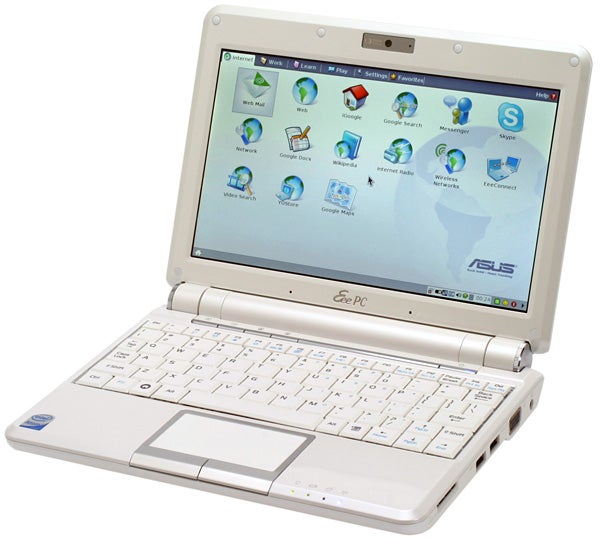
What, like Asus did back in 2007?
-
What, like Asus did back in 2007?
Unfortunately, these particular devices were kinda shit lol
-
He pointed to the laptop's 8GB of "unified memory," or what amounts to its RAM, and how customers can't upgrade it.
Yes, because Asus laptops all have non-soldered RAM...
A few do have non-soldered RAM, the most expensive workstation laptop and a couple of gaming laptops; all of which are >$2000.
Yes, because Asus laptops all have non-soldered RAM…
I think what that poster was communicating is that shipping a laptop with 8GB of RAM would be okay if it was socketed (allowing for an upgrade by the user) or if the shipped unit with soldered RAM was greater than 8GB (16GB?, 32GB?,64GB? soldered).
-
Unfortunately, these particular devices were kinda shit lol
EEEs were amazing! Not because of their performance or specs, but because they were a fully working compute for dirt cheap at only $199! Remember, these were released 5 years before the first Raspberry Pi. The original model of EEE with its 7" screen 512MB RAM and 4GB of slow SSD storage were plenty of compute for small tasks or portable applications. The cheapest fully functional laptop you could buy at retail those days would still cost you $800-$900 for a pretty horrible machine.
Linux was part of the secret sauce that made them successful because it meant they didn't have to pay for an OEM Windows XP license.
-
Despite the hits Asahi took losing two of it's most prominent devs (one of whom is basically a wizard, as far as I can tell), I expect it to attract more attention than the more expensive devices because it'll have a much wider potential audience. On top of that, lots of groundwork that was laid deconstructing the M1 and M2 chips means the team isn't starting from zero, despite differences in the chip.
It'll take some time, but it's basically guaranteed to happen and I think sooner is more likely than later.
I daily drive my personal Macbook air M2 running Asahi (only booted into OSX twice in the time I've owned it). I really like the experience of Linux (Fedora) on Apple hardware.
However, its still got some growing pains before most folks would be happy with it as their primary. One of those limitations abslutely applies to the Neo. Asahi Linux on 8GB of RAM is VERY cramped. I've got 24GB of RAM and even I run into limitations sometimes. The other issue is the current maturity level of power management. Asahi does not have full use of the low standby power states. This means that even with "sleep" your battery will exhaust itself in less than a day if its not plugged in. The alternative is to power down the unit entirely, which works fine to save the battery, but means having to open all your applications back up when you power it back up. Since Mac hardware doesn't use ACPI, hibernation is also not available, which would also be a fine way to address this.
None of this is criticism agianst the Asahi team. They've done AMAZING things so far and what exists today is fully usable to me. Improvements also come early and often. The team is amazing!
However, Macbook Neo probably won't be a good use case for Asahi Linux for the forseeable future.
-
Yes, because Asus laptops all have non-soldered RAM…
I think what that poster was communicating is that shipping a laptop with 8GB of RAM would be okay if it was socketed (allowing for an upgrade by the user) or if the shipped unit with soldered RAM was greater than 8GB (16GB?, 32GB?,64GB? soldered).
Fair enough. Although Asus sells at least one laptop with 8 GB of soldered RAM, too.
Granted, it's "only" a Chromebook, but still.
Soldered RAM is almost always a bad thing, no matter the size. Maybe when it's the most the mainboard can support it's not too bad but even then you're out of luck if it ends up dying.
As far as I understand Apple is partly doing it because of the higher memory bandwidth, which is necessary for the way macOS manages memory. I still don't like it but at least they're doing it for a reason.
-
Fair enough. Although Asus sells at least one laptop with 8 GB of soldered RAM, too.
Granted, it's "only" a Chromebook, but still.
Soldered RAM is almost always a bad thing, no matter the size. Maybe when it's the most the mainboard can support it's not too bad but even then you're out of luck if it ends up dying.
As far as I understand Apple is partly doing it because of the higher memory bandwidth, which is necessary for the way macOS manages memory. I still don't like it but at least they're doing it for a reason.
Fair enough. Although Asus sells at least one laptop with 8 GB of soldered RAM, too.
Granted, it’s “only” a Chromebook, but still.
Chromebooks with low RAM are fine for many use cases. I've got a chromebook with only 4GB of RAM and its perfectly fine for web browsing or watching streaming which is the only things I use it for.
Soldered RAM is almost always a bad thing, no matter the size. Maybe when it’s the most the mainboard can support it’s not too bad but even then you’re out of luck if it ends up dying.
I used to think that too, but then I realized that the way I use computers (and it sounds like you do too) is to keep a unit a long time, take care of it, and use it to its limits (and perhaps beyond). There are millions of users that don't do what we do. They may be young kids that end up breaking the unit before 2 years pass. They may be a fashionista that has to change out their unit when the new fall color comes out (so they may not even own it a year). They may be an older person that only uses it to check facebook to keep up with their kids.
In all of these cases soldered RAM is just fine because the user will never reach the point they need to upgrade it. What they get in return for this is cost savings and likely a smaller (thinner?) unit, that is probably a bit more structurally sound (because it doesn't have to have a door or clips to have the RAM sockets accessible.
For users like you and me, soldered RAM is a bad thing. For most common users they don't care. They don't even know what soldered RAM is.
-
Fair enough. Although Asus sells at least one laptop with 8 GB of soldered RAM, too.
Granted, it’s “only” a Chromebook, but still.
Chromebooks with low RAM are fine for many use cases. I've got a chromebook with only 4GB of RAM and its perfectly fine for web browsing or watching streaming which is the only things I use it for.
Soldered RAM is almost always a bad thing, no matter the size. Maybe when it’s the most the mainboard can support it’s not too bad but even then you’re out of luck if it ends up dying.
I used to think that too, but then I realized that the way I use computers (and it sounds like you do too) is to keep a unit a long time, take care of it, and use it to its limits (and perhaps beyond). There are millions of users that don't do what we do. They may be young kids that end up breaking the unit before 2 years pass. They may be a fashionista that has to change out their unit when the new fall color comes out (so they may not even own it a year). They may be an older person that only uses it to check facebook to keep up with their kids.
In all of these cases soldered RAM is just fine because the user will never reach the point they need to upgrade it. What they get in return for this is cost savings and likely a smaller (thinner?) unit, that is probably a bit more structurally sound (because it doesn't have to have a door or clips to have the RAM sockets accessible.
For users like you and me, soldered RAM is a bad thing. For most common users they don't care. They don't even know what soldered RAM is.
For most common users they don’t care. They don’t even know what soldered RAM is.
They should, because when it's time to sell the laptop one with soldered RAM is gonna be worth a lot less (at least to me).
Chromebooks with low RAM are fine for many use cases. I’ve got a chromebook with only 4GB of RAM and its perfectly fine for web browsing or watching streaming which is the only things I use it for.
Fair, but there's still the potential of it becoming a paperweight if the RAM chips give out or Google forces AI shit into ChromeOS.
-
For most common users they don’t care. They don’t even know what soldered RAM is.
They should, because when it's time to sell the laptop one with soldered RAM is gonna be worth a lot less (at least to me).
Chromebooks with low RAM are fine for many use cases. I’ve got a chromebook with only 4GB of RAM and its perfectly fine for web browsing or watching streaming which is the only things I use it for.
Fair, but there's still the potential of it becoming a paperweight if the RAM chips give out or Google forces AI shit into ChromeOS.
For most common users they don’t care. They don’t even know what soldered RAM is.
They should, because when it’s time to sell the laptop one with soldered RAM is gonna be worth a lot less (at least to me).
There's an irony that the most valuable laptops for resale right now are the ones with soldered RAM. Why? Because the socketed units have their RAM stripped for resale separately from the unit. Even corporate fleets are doing this now and the bulk resale laptops are arriving without SSDs and RAM. Which units still have both? Units where both are soldered and not removable.
Chromebooks with low RAM are fine for many use cases. I’ve got a chromebook with only 4GB of RAM and its perfectly fine for web browsing or watching streaming which is the only things I use it for.
Fair, but there’s still the potential of it becoming a paperweight if the RAM chips give out or Google forces AI shit into ChromeOS.
These sell for $149 USD brand new. A general user would not spend a second of time troubleshooting a failed one. They'd just buy whatever the current model is for $149 which would probably be 4x as fast and with more storage anyway, then pitch the old one in ewaste.


Hello! It looks like you're interested in this conversation, but you don't have an account yet.
Getting fed up of having to scroll through the same posts each visit? When you register for an account, you'll always come back to exactly where you were before, and choose to be notified of new replies (either via email, or push notification). You'll also be able to save bookmarks and upvote posts to show your appreciation to other community members.
With your input, this post could be even better 💗
Register Login